Every week I try and give these posts some form of organization and give these posts a smooth flow to them. This week, there is no smooth flow, it is merely a compilation of random articles that I found to be cool and interesting. The waters of this post are choppy, you have been warned.
With the death of guitar hero and the imminent rise of the next generation of video game consoles, people are going to start having old, plastic guitars and outdated consoles piling up. Find out how to discard your used toys here.
I like being able to hear news about our government and be able to say, “fail” (with added face palm), this time is no exception.
I did not realize that this was such a big dilemma but, evidently, some parents have a hard time choosing between biodegradable and cloth diapers. This article is a little old, but that’s okay.
In more recent news, the Supreme Court rejected a lawsuit by several states which attempted to make utility companies reduce their greenhouse gas emissions.
PG&E is trying to guilt trip its customers into saving trees for an additional sixty dollars a year. Bad PG&E, bad.
Ugly or Not Ugly
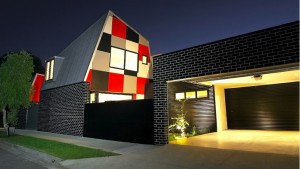
For more on this house click here.
Hello readers,
Today, Helmut, John, and I went to the Pacific property in order to meet with a representative from the SF Department of the Environment. The representative was helping us understand some of the rebates and programs put in place by the city. He was also at the property to do a compliance audit for our piping insulation installation. However, while he was there, he also alerted us to the existence of some of the services the city would also provide to help buildings stay “green.”
The most fascinating of these projects was the city’s project of incandescent to LED replacement. The city of San Francisco offers a program wherein they will replace a homeowner’s incandescent bulbs and cans for LED ones. LED lights are very energy efficient, but are also potentially expensive. Whereas standard incandescent bulbs use an average of 60 watts, fluorescent bulbs use 23 wats, and LEDs use only 4. To increase the number of people using LED’s and helping the environment, the city offers to replace the incandescent bulbs with LED’s to help achieve greater sustainability. Unfortunately, they won’t subsidize the transition from incandescent to LED.
All in all it was a very informative meeting. And, if you have incandescent lights, and wish to be more sustainable, call Ryan Chan at the SF Department of the Environment to switch them out!
Stay Dry,
Malachi
I have hope that flying cars will exist in the future. I have hope that there are actual people reading this blog. I have hope that ‘World Peace’ never changes his name back to Ron Artest. I can hope that these ideas come to fruition. But I don’t have to simply rely on hope when I think about the future of green construction.
On Wednesday, SRELP made a field trip to PCBC, a trade show at the Moscone center that showcased construction materials from around the nation. The vast number of green options was exciting and inspiring to behold. As is the case with many companies, there were a few people that used the word green a bit too freely to describe products that weren’t exactly green, but for the most part, the booths offered a variety of green options for building materials and construction. Some favorites:
Matrix Viribright LED Light bulbs: Whereas fluorescent light bulbs are indeed sustainable, LED lights are even better! This is due to the fact that LED lights do not use mercury, making them easier to dispose of; and use a greater portion of the electricity they consume for generating light– meaning that they are more efficient. In addition, Viribright’s light bulbs are cheaper than most LED bulbs. The one downside I noticed to Viribright’s LED lights is that they are only manufactured in China and Vietnam.
Trunano Counter Top Sealant: This sealant is unique for– supposedly– using no VOCs (a fancy word for dangerous chemicals like formaldehyde or acetone), being biodegradable, and using covalent bonds instead of using an adhesive to repel the liquid. This means that the counter tops only need to be resealed every 3 or 4 years, rather than every 6 months. The downside to this product is the price, but over time, having to buy this product once every few years ensures that the costs even out.
Enerflex Radiant Barrier: A layer of foil with a net of wire built inside, the enerflex barrier can be placed in one’s attic to reflect the heat waves that come from the sun outward, lowering the temperature of one’s attic. This means that the air conditioning unit can reduce its energy usage by up to 20%.
All in all it was a wonderful event, and I am glad to know that green business is still important to homeowners of the Pacific Coast.
Until next time,
Malachi
On Wednesday I got the opportunity to check out the Pacific Coast Builders Conference, PCBC, for the first time. The Moscone Center was jam-packed with an impressive variety of tradespeople advertising their product. Despite this, Sir Helmut was tripping pretty hard about how few people there were (and sober, no less!). Apparently, PCBC has been struggling with attendance for the past couple years since the economy went south. The numbers aren’t out for this year’s conference, but this article discusses past attendance issues the conference has had in previous years. Nevertheless, I was introduced to a lot of new, innovative products at PCBC that I’d like to share with you:
- Cabinets: Executive Cabinetry has come out with a line of cabinets, “EcoFriendly.” This product is certified to the highest GreenGaurd standard: Children & Schools. The cabinet is made with FSC certified wood, and finished with water-based products that emit zero Formaldehyde.
- Insulation: Owens Corning has released a new insulation product that is also GreenGaurd Children & Schools certified. Their pink EcoTouch insulation also helps prevent indoor air pollution by being Formaldehyde free.
- Solar water hearing: The Velux solar water heater was something I found particularly innovative. This is an Energy Star qualified system that should drop energy consumption for heating your water by 50-80%. I really liked this system because it could be installed in conjunction to a skylight you could use for your bathroom.
- Roofing: I’ve never really thought to use recycled rubber and plastic to roof a home, but EcoStar has provided us this service of sustainable roofing with a line of tiles made out of 80% post-industrial recycled materials. I saw for myself at PCBC that these products look almost exactly like the tiles or wood shake they emulate. This roofing is warrantied to last 50 years. This product is recyclable, so once that time is up just toss them in the blue bin.
I’ve been busy at the office researching/googling a host of different aspects to green building–in the hopes of gathering research for my sustainable apartment kitchen project. I have stumbled across a good amount of interesting websites and articles, and thought it would be a good idea to share it with you all. My first “green building bucket list” goes as follows:
- GreenPoint Rated: If you think you own a “green” home or are considering building one, try putting that “green”-ness to the test with the systemized rating system from The Green Building Council. This GreenPoint Rated system certifies that the property you own or plan to build is more comfortable and healthier, while simultaneously lessening your impact on the environment.
- PG&E sham(?): An interesting article from SFGate exposed a PG&E carbon offset program to be more marketing sham than sustainable function. This “ClimateSmart program highlights the complex and murky relationships among big business, state regulators and conservation groups working on climate change – a relatively new and untested system in which a huge amount of money is traded without much public scrutiny.”
- Noise Abatement: If you are looking for some way to muffle your neighbor’s noise next door, Keene Building has a line of products called Quiet Qurl that are made out of 40% recycled content and are designed to absorb sound in apartment or dormitory complexes. This polymer matrix that you apply between walls or under flooring in conjunction with gypsum concrete can also help if you are looking for LEED certification.
- Alternative Countertops: On the subject of kitchen countertops, few consider using butcher block. “Butcher block countertops are natural, beautiful, practical, renewable, economical, and, contrary to popular belief, one of the safest, most sanitary kitchen work surfaces available.” Helmut has also noted other cool alternative countertops to the traditional laminate or granite.
That is all I got for now. More soon.